



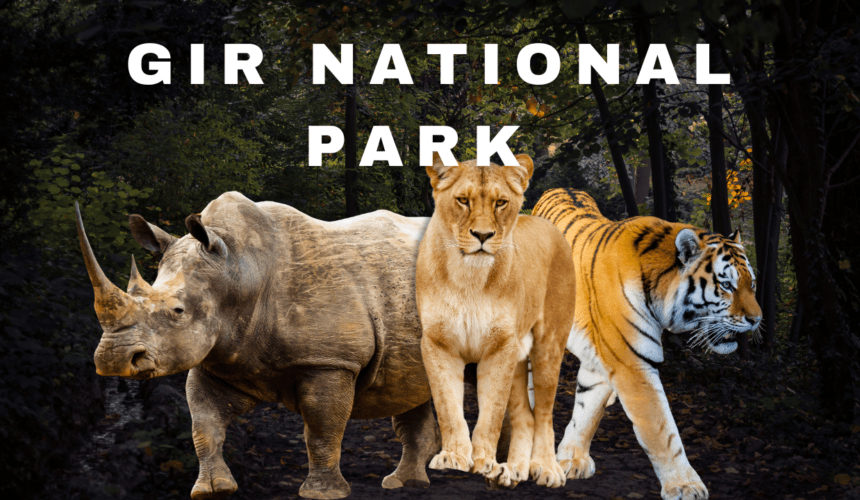
Gir is the only place in the world where you can still see wild Asiatic Lions. This alone makes the forest special. The dry wind, the deep calls of deer, and the dusty sunrise all set the mood for a thrilling adventure. If you are planning your first Gir National Park safari, this guide will help you understand everything in simple steps. I will walk you through bookings, timings, zones, wildlife, and what to expect.
Discovering Gir: Land of Lions and Untouched Nature
Gir is known across the world for one reason: it saved the Asiatic Lion from extinction. Local communities and forest teams worked for decades to bring back the population. Today, the forest is alive with strong lion prides and rich wildlife.
Meanwhile, the forest landscape has its own charm. Gir is filled with rocky hills, open land, and dry scrub forests. These open areas make lion sightings easier than in dense jungles. As your Gir National Park safari begins, you will notice movement everywhere. Deer leap across the road. Peacocks sit on branches. The forest feels active even before sunrise. Every turn holds a chance to spot something wild.
Booking Your Safari: Online and Offline Permit Guide
A smooth trip begins with correct Gir National Park booking. The online booking system is the easiest method. You can choose your date, time, and route. Slots fill up fast, especially during holidays and winter months.
There is also an offline counter at the forest gates. But offline permits are very limited. You must arrive early, stand in line, and hope slots remain. If you do not want to deal with website glitches or long queues, Palki Travels can handle the full booking process for you. This saves time and avoids last-minute stress.
Timing Matters: When to Go for Maximum Sightings
Many travelers ask, “Which is the best safari in Gir?” There is no single fixed answer. But certain timings and seasons offer better chances. Morning safaris are excellent for spotting lions walking or resting near water. Evening safaris give you softer light, calmer winds, and good animal movement.
When it comes to the best time for gir safari, winter stands out. From December to March, the heat is low. Animals come out more often. Birdwatching also becomes better during this season. The park stays closed during monsoon, so avoid planning between mid-June and mid-October.
Safari Zones, Routes, and Vehicles
Gir has several safari routes spread across different zones. Each route offers a mix of open grassland, thorn forests, and water points. No zone can promise lions, but routes near streams and dry plains often have more activity. You will explore the forest in an open Gypsy. The guide watches for pugmarks, calls, and movements. Meanwhile the driver follows small signs that tourists often miss. Their experience greatly improves your chances of spotting lions or leopards.
Gir’s Wildlife Beyond Lions
Even though lions are the main attraction, Gir forest wildlife is much richer than most visitors expect. You might see:
- Leopards resting on tree branches
- Chital and sambar deer moving in herds
- Wild boars digging for food
- Jackals running through dry grass
- Crocodiles near water bodies
- More than 300 species of birds
- Many reptiles sunbathing on rocks
The Flora of gir national park is equally interesting. You will find teak, acacia, flame-of-the-forest trees, and large patches of dry grass. These plants shape the entire ecosystem and support all wildlife, from small birds to top predators.
Other Animals You Will Meet in Gir
Visitors often ask about the range of Gir National Park animals besides lions. You will likely spot nilgai, langurs, peacocks, and many bird species. If you are lucky, you may even see a leopard crossing a trail or a crocodile resting near a lake. Gir is full of surprises, so stay alert throughout the drive.
Practical Tips for a Better Experience
To make the most of your safari, keep these practical tips in mind:
- Wear light and earthy-colored clothes.
- Carry a scarf or hat to block strong sunlight.
- Bring a camera with a good zoom lens.
- Keep your voice low inside the forest.
- Stay seated when the guide asks you to.
- Do not feed animals under any condition.
- Keep water with you for the three-hour ride.
For a trouble-free trip, Palki Travels can plan your stay, transport, permits, and safari timings so you only focus on the adventure.
FAQs
- What is the best time to visit Gir?
December to March gives the best weather and great wildlife sightings. - How long is each safari?
A safari usually lasts around three hours. - Are lion sightings guaranteed?
No. But Gir offers one of the highest chances to see lions in their natural habitat. - Do I need a guide during the safari?
Yes. A guide is required and very helpful for tracking animals. - Can kids join the safari?
Yes, children can join as long as they sit safely and stay quiet.
Conclusion
A visit to Gir is more than just a holiday; it is an active participation in a crucial conservation success story. It is a rare and humbling chance to witness the Asiatic Lion, a species brought back from the brink – thriving in the single, protected habitat it has left in the entire world. The magic of a Gir National Park safari lies in its raw, authentic atmosphere: the feel of the dry wind, the vibrant contrast of life against the scrub forest, and the constant, quiet thrill of the hunt for a lion sighting.
You learn patience as you scan the landscape and gain a deep respect for the forest ecosystem as you follow the subtle signs, from the distant warning calls of a Sambar deer to the faint pugmarks in the dust. The forest leaves you with more than just photographs; it instils a sense of quiet excitement and a collection of powerful, lasting memories that stay with you long after your journey ends. To ensure your focus remains entirely on the adventure and not the logistics, consider letting Palki Travels handle the full process from permits and bookings to transport guaranteeing a smooth and stress-free experience.
Comments are closed